Winter Coastal Stargazing Retreats in the UK: Where to Stay and What to Bring
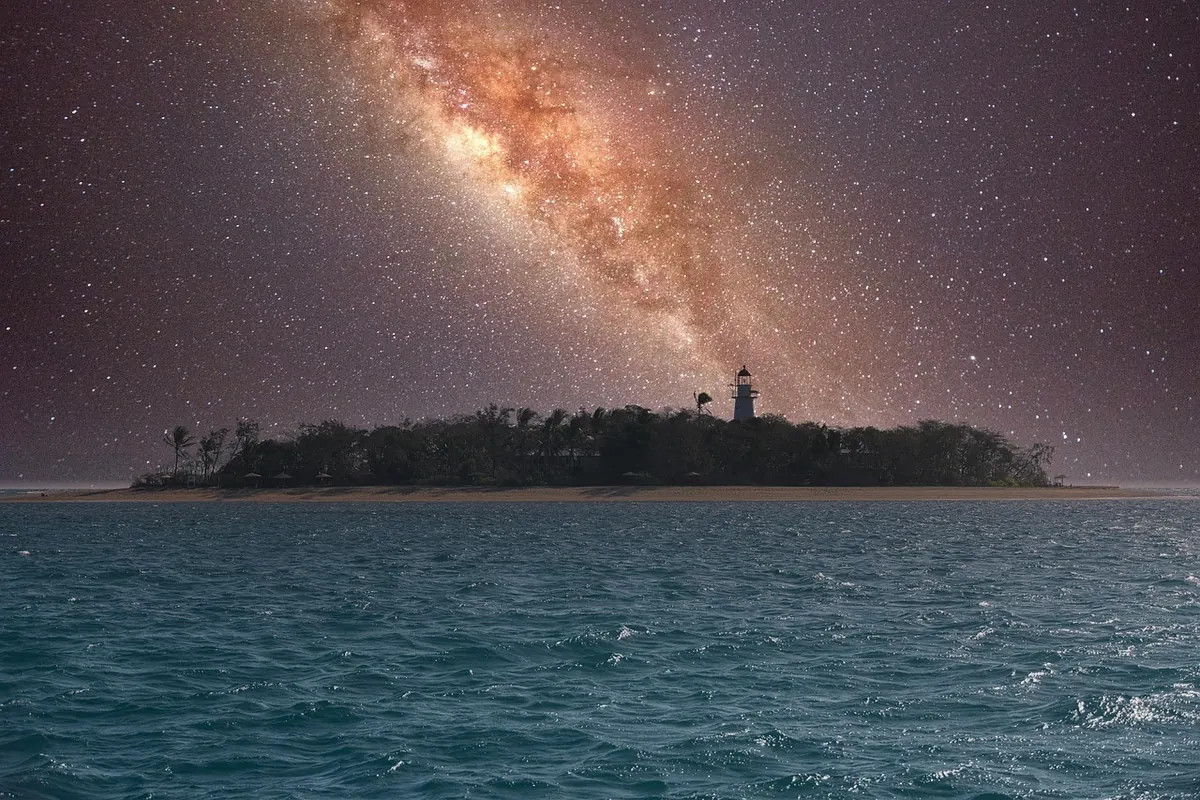
Winter stargazing on the British coast is a trade: you accept numb fingers in return for the longest, darkest nights of the year. Darkness falls before five o'clock, the winter constellations are the brightest of the year, and a cold, clear night after a front has passed can be astonishingly transparent. The catch is cloud and wind — and the sea breeze that finds every gap in your clothing. Get the location, the cottage and the kit right, and you can stand on a shingle beach with Orion overhead, the Milky Way faintly visible, and not another soul in sight.
Why winter beats summer for the night sky
Two things work in your favour. The nights are long, so you are not waiting until midnight for real darkness, and the air is often drier and more stable than in summer, which sharpens the view through binoculars and telescopes. Winter also brings the best-known constellations: Orion with its belt and the Orion Nebula, Taurus with the Pleiades, Gemini, and Sirius blazing in Canis Major.
It is the season for meteors too — the Geminids in mid-December and the Quadrantids in early January — and for the best chance of catching the aurora from northern Britain, which is most often seen between autumn and spring. Check a cloud forecast and the moon phase before you commit. A full moon washes out everything but the brightest stars, so aim for the week or so either side of a new moon.
Dark-sky coasts worth the drive
Designations matter less than distance from streetlights, but the UK has several places where a genuinely dark sky sits right next to the sea.
Northumberland
Kielder Water and Forest Park is a designated Dark Sky Park, and its darkness stretches across much of the county. The coast between Amble and Berwick is the best of both worlds: dunes and beaches with dark skies behind them, and Kielder Observatory an hour or so inland if you would rather have someone else point out the constellations.
Exmoor
Exmoor holds International Dark Sky Reserve status, and its coast is dramatic by night — the high cliffs at Countisbury, the wooded valleys around Porlock and Lynmouth. Pull into a lay-by on the A39 on a clear evening and you get sky all the way down to the horizon over the Bristol Channel.
Pembrokeshire, Anglesey and the Llŷn
The Pembrokeshire Coast National Park is dark enough to matter, particularly inland towards the Preseli Hills and along the north coast away from Haverfordwest and Fishguard. Further north, Anglesey and the Llŷn Peninsula offer sea-level darkness with wonderfully low horizons.
Galloway and the Scottish islands
Galloway Forest Park was the UK's first Dark Sky Park, with the Solway coast and the Mull of Galloway nearby. For the darkest skies of all, head for Coll, Tiree or the north of Skye, where the horizon is ocean and the only light comes from a lighthouse.
Isle of Wight and the North York Moors
The Isle of Wight is a designated Dark Sky Island, and Compton Bay on the south-west coast is a favourite for beach-level viewing. In Yorkshire, the North York Moors Dark Sky Reserve reaches the coast around Ravenscar and Robin Hood's Bay.
Choosing somewhere warm to sleep
Location is only half the booking. Look for a cottage, shepherd's hut or glamping pod with a wood burner or solid-fuel stove, and check whether there is somewhere to dry wet coats. Self-catering beats a hotel for this kind of trip: you can eat early, drive out at nine, and come back at midnight without working around anyone else's schedule.
Two details are worth asking about directly. First, external lighting — a farm or holiday park that leaves security lights on all night will spoil the view from your door. Second, how far you have to travel to a dark spot; a ten-minute drive is manageable in the cold, a forty-minute one is not. In Northumberland, Battlesteads in Wark has its own observatory and runs astronomy evenings, which suits anyone who would rather be shown the sky than find it themselves.
What to bring
Assume it will be colder than the forecast suggests, and that you will stay out longer than planned.
- Red-light torch or head torch for finding things without wrecking your night vision.
- Layers: thermal base layer, fleece, insulated jacket, hat, gloves — and a spare pair of gloves.
- Insulated boots and thick socks, plus waterproof overtrousers if you will be on wet grass or sand.
- A reclining camping chair or a foam mat. Looking straight up is far more comfortable lying back than craning your neck.
- Binoculars. 8x42 or 10x50 are the practical sizes, and they show the Pleiades, the Orion Nebula and Jupiter's moons.
- A planisphere or star app, plus a battery pack to keep a phone alive in the cold.
- A flask of tea or coffee and something to eat.
- Hand warmers and a lens cloth or two — dew forms on optics within minutes.
Setting up for a good hour outside
Arrive in daylight if you can, so you know the ground and where the trip hazards are. Give your eyes twenty to thirty minutes to adapt: no phone screens, no white torches, no car headlights. Then sit down. Standing and staring upwards is tiring, and tired people go home early.
Use the first half hour to learn a couple of constellations rather than trying to see everything. Sweep along Orion's belt and around the Pleiades with binoculars, keep a mug in one hand and a star chart in the other, and glance up now and then for satellites crossing overhead. Keep binoculars in their case between looks, or dew will fog the lenses.
Staying safe on a dark coast
Cliff edges, wet rocks and cold water are the real risks, not the darkness. Check tide times before walking onto a beach and never let the sea cut off your route back. Stay well back from cliff tops — a torch beam does not show you where the edge is. Tell someone where you are going and when you expect to return, and remember that mobile signal on remote stretches of coast can be patchy, so download maps and a star app before you leave.
Planning your winter retreat
Work backwards from a new moon, then book. Choose two or three nights rather than one, because a single cloudy evening is a wasted trip. Check the cloud forecast a day or two before travelling, keep the kit list above packed in one bag so nothing is forgotten, and keep the first night simple: a flask, a chair and half an hour at a dark lay-by.
If the sky does cloud over, you have still booked a warm cottage on a quiet coast in winter. Walk the beach in the morning, eat a long lunch, and try again after dark. That is the advantage of a retreat over a single evening out.
Photo: MemoryCatcher / Pixabay